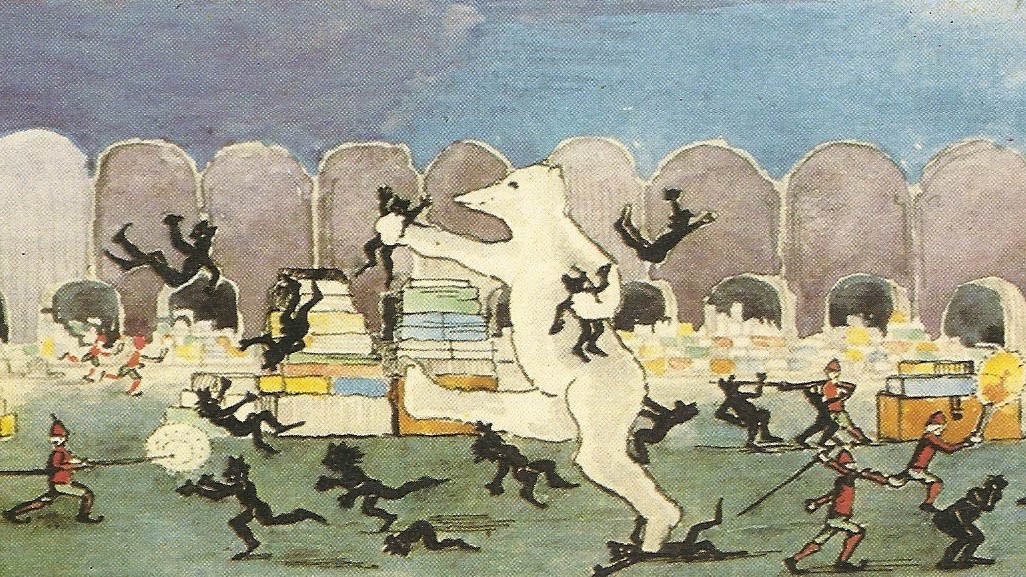
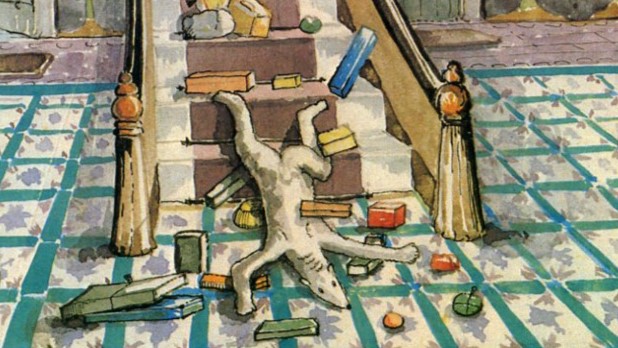
I hope in future Christmas seasons to cover more thoroughly Tolkien’s writings in his Letters from Father Christmas, Farmer Giles of Ham, and even his translation of Sir Gawain and the Green Knight, but this year the focus of the video was on Christmas in Middle-earth, the thesis of which is this:
The Yule of pre-Christians pagans, whether the feast days in Middle-earth or Grandfather Yule in the Father Christmas Letters, does not merely precede Christmas, it presages it. And likewise Christmas, whether the medieval feast days of Farmer Giles or the modern holiday season seen in Letters, is not merely about religious rites and rituals; rather the Dragons, Goblins, and Gnomes from the pagan past retain a place of prominence. For Tolkien – much like the scribe of Beowulf, as well as for his fellow Inklings – there was room enough in life and literature for the Christian and the pagan; for Christmas and Yule.
Christmas meant many things for Tolkien, both within his Legendarium and in real life. But in both it meant for him (and for me, and for many of us) one thing above all else: it is when the One, Eru Ilúvatar, entered into Arda as the incarnate Christ Jesus to “heal Men and all the Marring from the beginning to the end.”


 The Hub City Review